Overview: Swimming Lessons
In England, swimming is part of the primary school curriculum. Before they leave primary school, children should swim competently over a set distance, use a range of strokes and perform safe self-rescue. Lessons outside school are how many families make sure that actually happens.
Many pools in England teach Swim England's Learn to Swim Stages, the core national syllabus for primary-aged children. Each stage lists outcomes a child has to show consistently before they get the badge and move up. Teachers qualify through Swim England or the Swimming Teachers' Association.
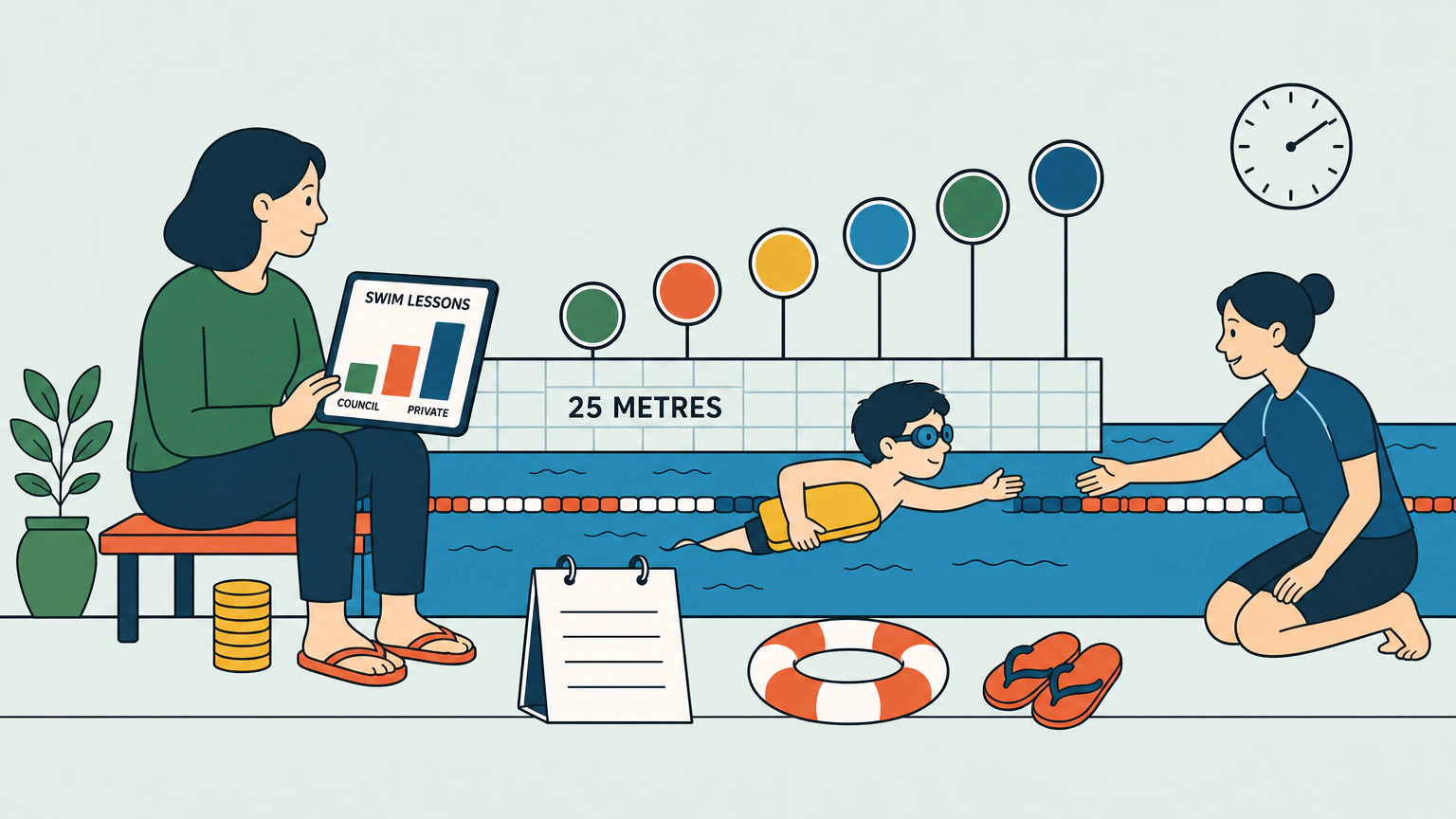
Leisure centres run big programmes in the main pool, which can feel cold to a toddler. Private swim schools often hire small, warm teaching pools, and that's mostly what you're paying extra for. Ask how many children one teacher takes and whether the teacher gets in.
Our listings show what each swim school states on its own website. The region and town lists below lead to swim schools in your area.
Cost of swimming lessons in the UK
Choose the learner’s age and lesson format first. For weekly groups, compare teaching weeks and payment commitments; for private lessons, check pool entry and the support suited to the swimmer.
| Format | Approximate cost | What to allow for |
|---|---|---|
| 30-minute parent and child swimming class | Approx. £6–£19per child with accompanying adult per included lesson | One child attends with an adult. Baby and toddler age limits and group sizes vary.The complete block is payable upfront. Check the age band, adult participation, required swim nappies and rules for missed classes or automatic renewal.Details and other formatsPrice basis: Approximate observed class fee for a scheduled 30-minute parent-and-child lesson. Term blocks or monthly payments may be required; swim nappies and other personal swimwear are extra. Confirm what is included: Adult pool admission and any required swimwear. |
| Children’s year-round group lessons | Approx. £30–£40per month for a weekly 30-minute place, over 50 teaching weeks | Monthly payments cover the teaching year, including school holidays where scheduled. Ask about joining payments, awards, practice swimming and the notice needed to leave. |
| Adult group lessons | Approx. £35–£55per month for one 30-minute class each teaching week | Choose an adult group matched to your confidence and ability. Compare the annual lesson count, group size and cancellation notice alongside the monthly fee.Details and other formatsConfirm what is included: Ask whether the teacher is in the water and whether the group is adults only. |
| 30-minute one-to-one swimming lesson for a child | Approx. £23–£39per child per included lesson | One learner and one teacher for thirty minutes. Private tuition does not necessarily mean exclusive pool use.One child has the teacher’s attention. Confirm pool-entry inclusion, the teacher’s position in the water and whether single sessions or a recurring booking suit your needs.Details and other formatsPrice basis: Approximate observed child tuition fee for a 30-minute individual lesson. Term or monthly commitments may apply; confirm pool admission, equipment and any deposit. Adult tuition is shown separately. Confirm what is included: Exclusive teacher attention and pool entry. |
| Adult private lessons | Approx. £20–£45per adult per 30-minute lesson | Individual help with water confidence or technique. Explain your starting point and ask about pool depth, privacy, teacher support and availability before purchasing a package. |
| Shared private lessons for two children | Approx. £35–£50total for two children per 30-minute lesson | Two children share a teacher. The fee is for both together; confirm compatible ability levels and who pays if one child misses a lesson. |
Plan your budget
A full year of children’s group tuition: 12 monthly payments for a 50-lesson teaching year = £360–£480.
One 30-minute group lesson each teaching week, staying enrolled for the full year at an unchanged monthly fee. Add any joining, award or personal-kit charges; confirm cancellation terms.
Before you book
- How many lessons are taught each year, how many payments are collected, and what happens during holidays or missed sessions?
- How many swimmers share the teacher, where does the teacher stand, and does the pool depth suit the learner’s confidence?
- Does the total include pool entry, awards and practice swimming, and what notice is required to leave or change a recurring booking?
Price factors and extra costs
What changes the price?
- Age, starting ability, group size and individual attention.
- Lesson duration, pool setting and teacher support in or beside the water.
- Teaching calendar, full-block commitment and single-booking availability.
Possible extra costs
- Joining fees, badges or certificates where separately charged.
- Swimwear, goggles and required baby swim nappies.
- Practice swimming, parking or spectator entry if excluded.
Ways to save
Compare the whole teaching year and any included practice swimming, and try a suitable class before committing to a longer private package.
Other points to check
- Term-time swim schools and holiday intensive courses need a separate quote showing the complete fee, lesson count and lesson length.
Frequently asked questions
What should a first swim lesson cover?
Water confidence and safety. The opening Swim England stage asks a child to enter the water safely, move forwards, backwards and sideways, float on the front and back and return to standing, and push and glide from the wall. Floats and armbands are allowed at that point. Strokes come later, once a child is happy with a face in the water.
What should my child learn in school swimming lessons?
In England, the national curriculum says primary schools have to teach swimming and water safety. By the time children leave primary school, they should swim competently and confidently over a set distance, use a range of strokes such as front crawl and breaststroke, and perform safe self-rescue. Ask the school how your child did. If they fell short, private lessons are the obvious way to close the gap.
Does a level from another school count?
Sometimes. Many pools in England use Swim England's Learn to Swim Stages, and each stage has clear outcomes, so a badge from one pool tells the next quite a lot. Private schools often use their own names, though. Most will still watch your child swim before placing them. If the result is lower than you expected, ask which outcome is missing.
What qualification should a swimming teacher hold?
A recognised teaching qualification from Swim England or the Swimming Teachers' Association. STA qualifications are regulated by Ofqual, Qualifications Wales and CCEA, and newly qualified STA teachers get membership that includes public liability insurance. A helper or assistant is a different role. Ask who is actually leading your child's class and what they hold.
Who supervises the changing rooms and poolside?
Ask, because this is where swimming differs from a dry class. Children change, adults are nearby, and phones are a real worry. A school should have a photography rule, a changing room policy and named adults on poolside who aren't teaching. In England and Wales, teachers working regularly with children usually need an enhanced DBS check. In Scotland it's PVG scheme membership.
Can an adult who is scared of water learn?
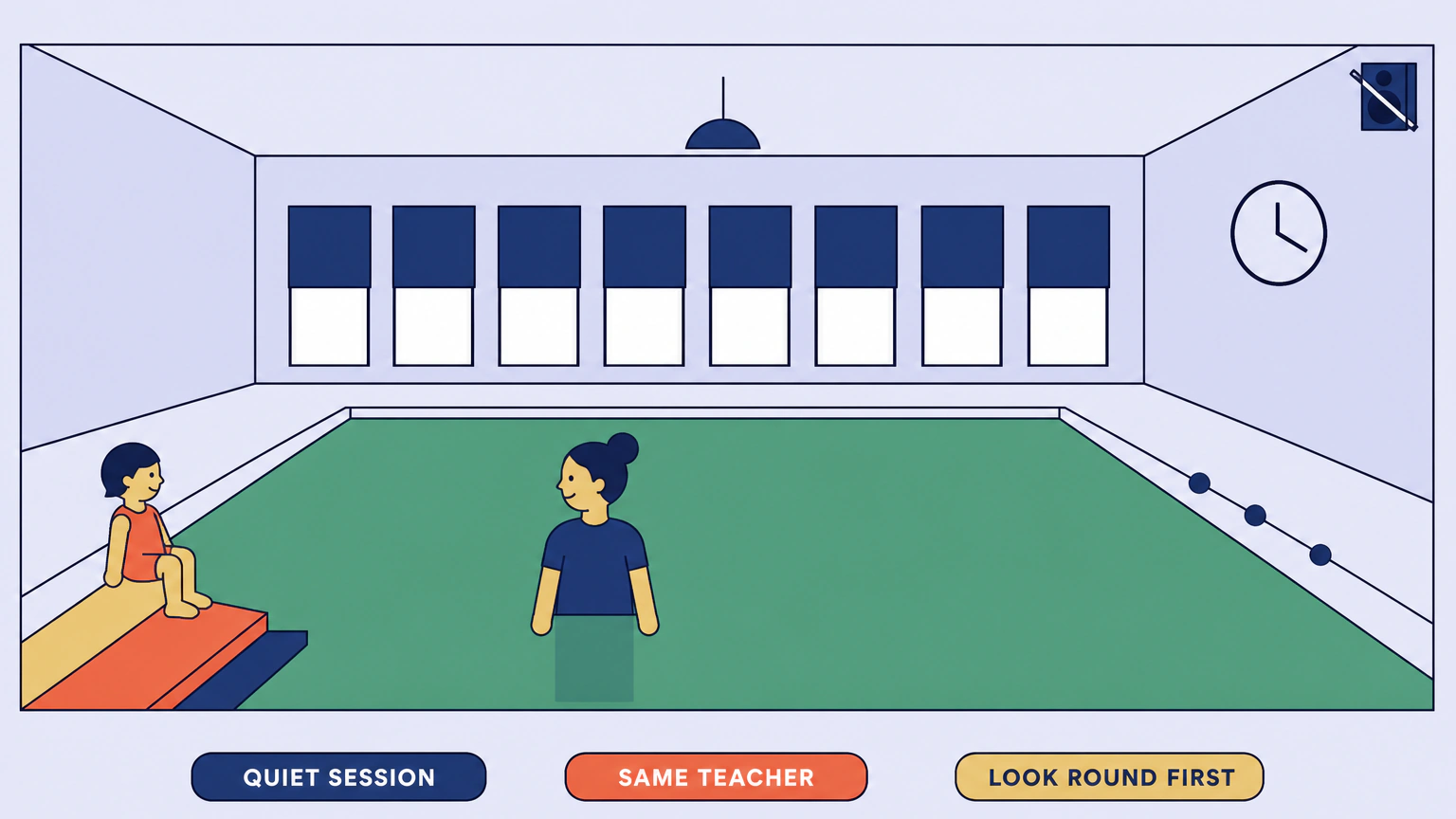
Yes, and you're far from alone. Swim England has adult swimming awards, and plenty of leisure centres run beginner sessions just for grown-ups. Start in the shallow end with a teacher who lets you set the pace, including when your face goes under. Ask whether the session is adults only. Swimming beside a noisy children's lesson is enough to keep some nervous adults out of the pool.